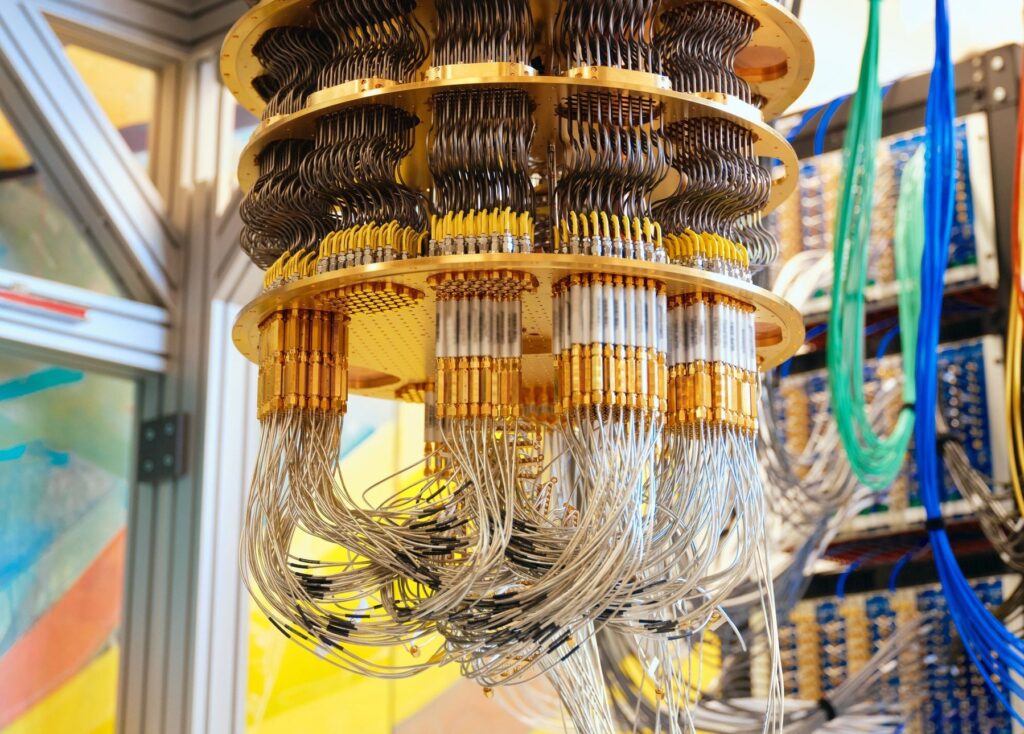
Quantum technology overview
What is it all about and why should you care?
You’ve probably heard a lot about “quantum” recently. 2025 was the International Year of Quantum Science and Technology, reflecting 100 years on from the foundational discoveries, a number of next generation quantum technologies, or quantum 2.0, are approaching maturity.
Quantum physics is a weird and confusing subject, full of mysterious terms like entanglement and teleportation, and counterintuitive phenomena such as the legendary “Schrodinger’s cat” thought experiment. Although the quantum weirdness is often difficult to observe at a macroscopic scale, this month saw the Nobel Prize for Physics awarded for an experiment back in 1984 that did exactly that, using specialised superconducting circuits.
While we don’t normally see quantum weirdness in everyday materials, the underlying quantum physics causes “quantisation” of energy levels that are behind how devices such as transistors and LEDs work. So in some sense, the device you are using to read this article is a type of quantum computer! However, the quantum 2.0 revolution is about going beyond these bulk phenomena to be able to control and measure individual quantum states.
The good news is that you don’t need a PhD in physics to start thinking about the potential impact of quantum 2.0. We can broadly split the technologies into four main categories:
- Quantum randomness or entropy: typically when we use computers to generate “random” numbers this causes a problem, since computers are (despite anecdotal experience) deterministic. Although there are various workarounds, quantum processes provide an alternative that is truly, provable random.
- Quantum sensing: these use the fact that quantum systems are very sensitive to their environment to detect small changes in the environment. Potential applications include quantum navigation and timing systems, quantum sensing of gravity, magnetic fields and more.
- Quantum communication: a way to transport quantum states between different locations – this could be used to network together quantum sensors or quantum computers, or maybe could be used in itself as a technique for secure communications.
- Quantum computers: an area of immense interest and investment, although we need to be careful to realise quantum computers cannot just do the same calculations as today’s computers only faster/better/cheaper. Instead, quantum computers introduce a completely new paradigm of computing, one which might enable new types of calculations that are intractable using current computers.
There is also another important topic – post quantum cryptography (PQC), sometimes called quantum resistant cryptography (QRC). This is a potential response to the expected impact of quantum computing on *some* but not all types of encryption. PQC/QRC is not actually a quantum technology, but something that can be run on existing computer systems. Be wary of anyone using the term “quantum cryptography” – this is ambiguous, probably meaningless, and to be avoided!
Explore the various technologies in more detail
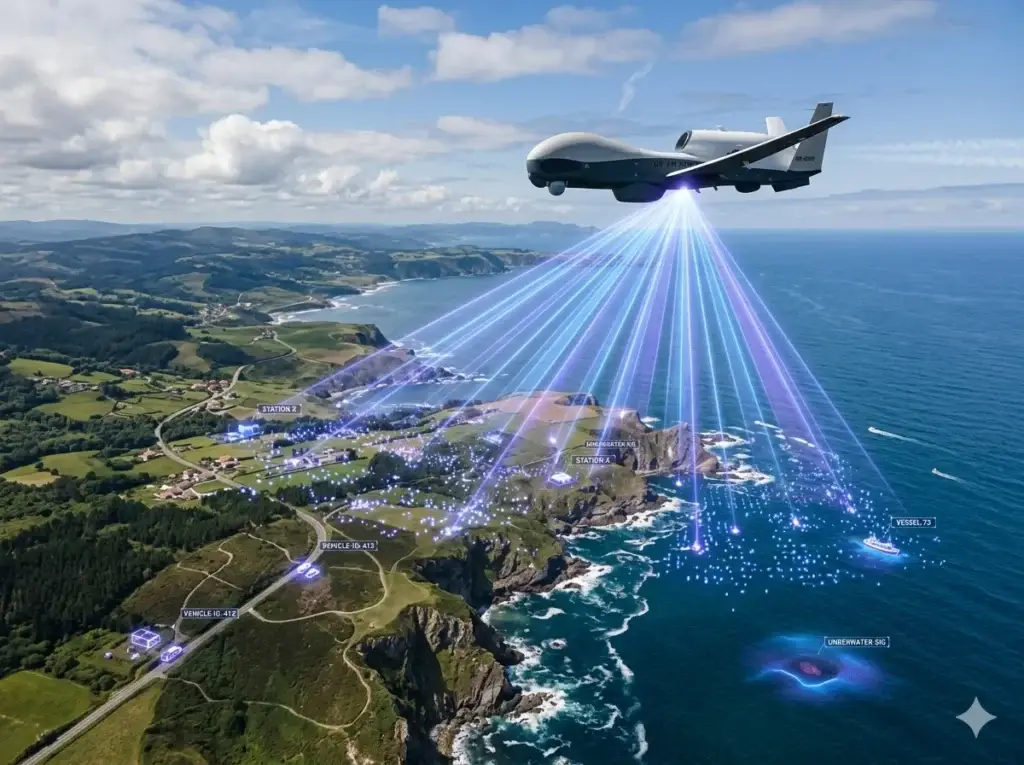
Explainer – what is quantum sensing
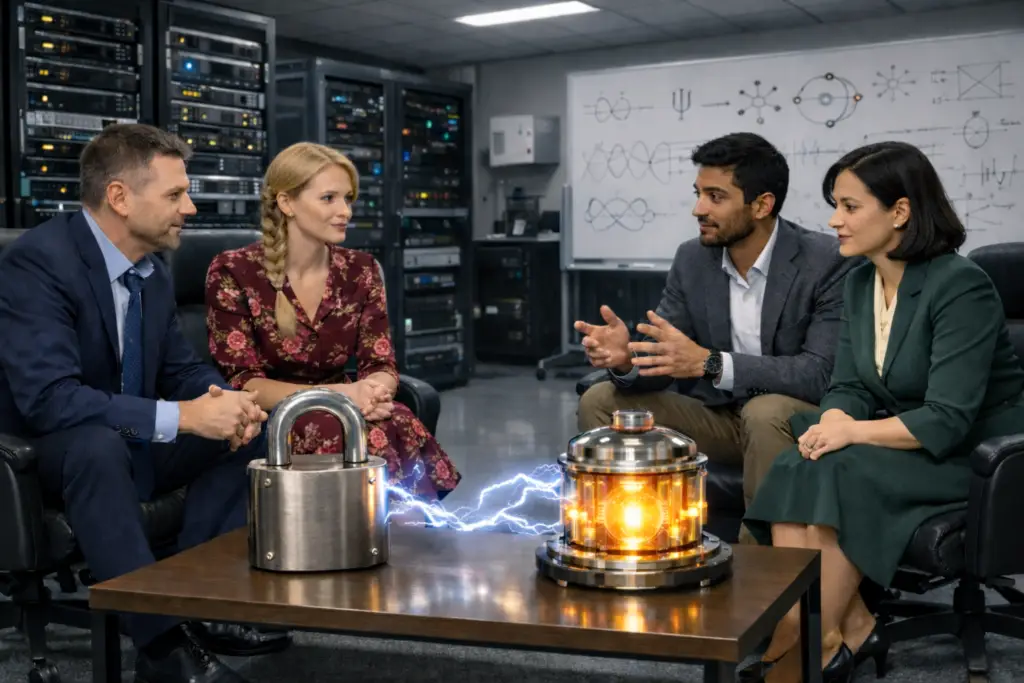
The basics about quantum computing, encryption and cyber security
Explainer – what is quantum computing