
The biggest (and most dangerous) myth about quantum computers
How far away is a genuinely useful quantum quantum computer?
Another article discussed some common misunderstandings about what quantum computers can do, and why it can be dangerous if these myths persist. However, it left out the biggest myth of all:
General purpose useful quantum computers are imminent (or even already here)
The last couple of years have seen an acceleration in investment in quantum computing, both by governments and the private sector. Investment in quantum startups grew from $1.3 billion in 2023 to $2 billion in 2024, and has grown even faster this year. This has also driven lots of headlines as companies promote their latest advancements in order to encourage sales and/or further capital raising. These announcements, in turn, are seized upon by some commentators to proclaim the quantum era has arrived. Apparent “quantum experts” have recently made claims on social media such as “the era of quantum artificial general intelligence has arrived”, and confidently predicted a computer that can crack current encryption standards in the next 12 months.
The truth is much more prosaic – the announcements that aren’t pure marketing hype and do actually demonstrate significant advances only reinforce how far away a generally useful quantum computer is. For example, in December 2024 Google showed, for the first time, that “error correction” could actually reduce errors instead of increasing them, while in October 2025 they managed to show for the first time that the results from running a calculation on a quantum computer were reproducible1. A comparison of some of the roadmaps set out 5 years ago to what progress we’ve actually made in that period makes sobering reading.
Today we have, at best, a few hundred qubits that can run for a few minutes or maybe hours; we probably need a million qubits that can run for several days to solve the really valuable use cases. There are currently many different types of qubit technologies being developed by different companies, but they all have some fundamental scientific and technological limitations that will need to be overcome to reach this sort of scale. The first quarter of 2026 saw a series of headlines and claimed research breakthroughs, but an in-depth analysis shows they won’t miraculously change things overnight.
That’s not to say we won’t get there, and there may well be some dramatic inventions and innovations that speed up the path to success – but there is a lot to do. We may also get some narrow cases of “quantum advantage” for very specific use cases in the next few years, but it should be remembered that there is no proven use case today where an existing quantum computer provides any economic benefit.
The danger of the myth that success is just around the corner is that it creates unrealistic expectations. The consequences of these could, in the worst case, actually stop us from ever achieving the end goal of a useful quantum computer. There is a serious risk that some of the current froth and hype encourages organisations to act prematurely in buying and deploying early-stage technology. This is likely to end up wasting resources and causing disillusionment. This in turn will discourage future interest, investment and uptake of the technology when it is actually ready and useful.
We need to be clear on the magnitude of the scientific and engineering barriers ahead, and keep investing in fundamental and applied research to help find the required breakthroughs. Currently, significant amounts of commercial capital are being attracted to fund some of this investment, but honesty is required to make sure investors understand the risks and the potential long-term nature of the endeavour. The typical venture capital models are such that many players may not keep the faith if it turns out that general-purpose, practical quantum computing takes a decade or more to materialise. Policymakers should not believe that success is imminent, and need to take action to make sure that mitigations are in place against such a funding cliff, before it happens.
Quantum computing is turning out to be a classic example of Amara’s law:
We tend to overestimate the effect of a technology in the short run and underestimate the effect in the long run
Full transparency and honesty, avoiding overestimations about the short-term prospects of quantum computing, is needed to ensure we do eventually get to realise the long term effects that we may be underestimating.
Final thought: this dose of realism shouldn’t distract from the importance of starting now to assess your risks from quantum threats to encryption and start planning your response, because experience shows that cryptographic upgrades are long multi-year projects. Also, until you’ve assessed your risk you don’t know how much work you need to do, and also whether you have any risks to harvest now, decrypt later attacks that might mean you need to take more urgent action. Check out our series on quantum and encryption for more information and practical advice
Other quantum computing articles:
Quantum technology overview – what is it all about?
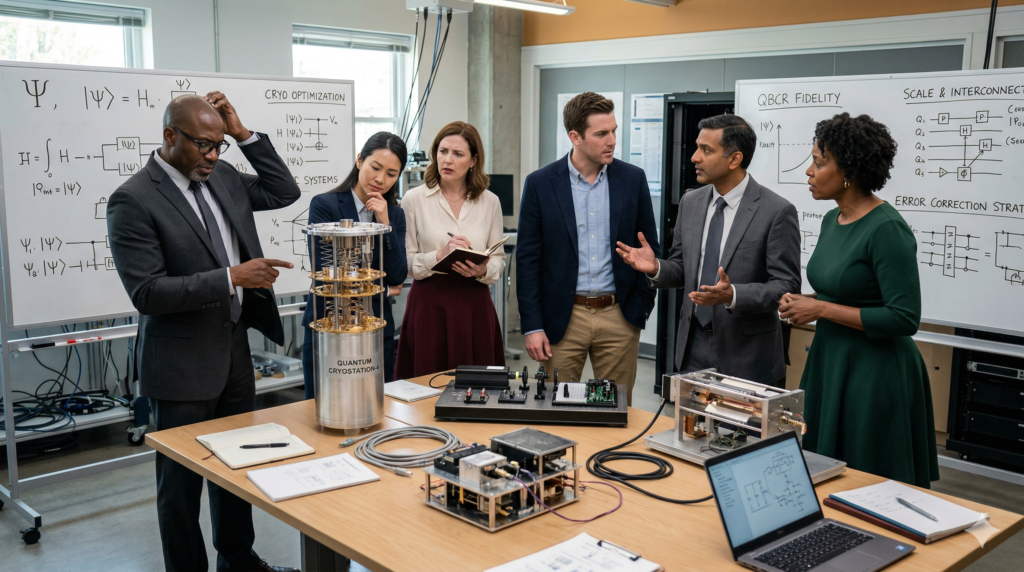
Explainer – what is quantum computing
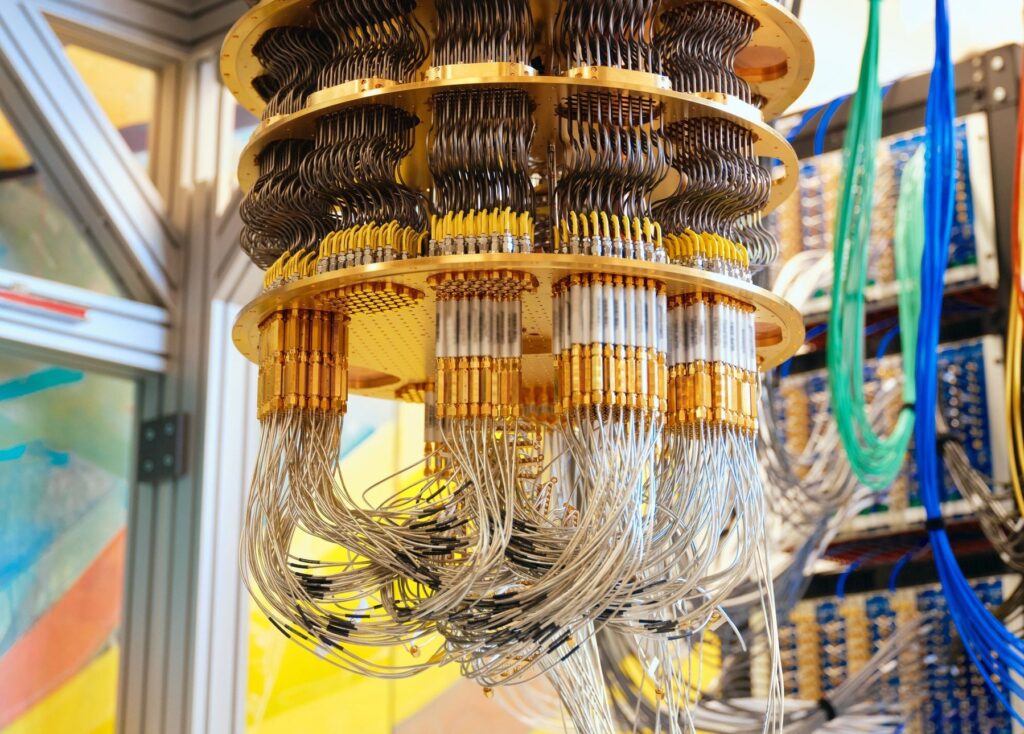
Common myths about quantum computers
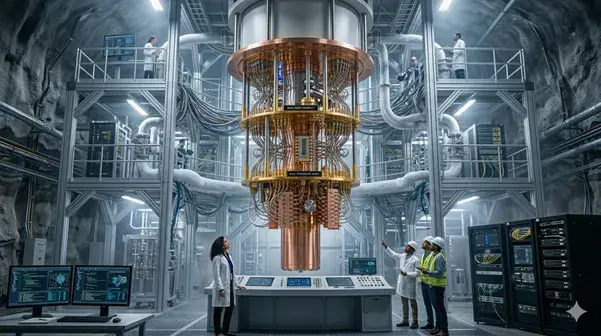
Quantum computers will be big, slow and expensive – so what will they be good for?
August 2026 – Tech in Gov Canberra
In August 2026, Rajiv Shah presented on Day 2 of the Tech in Gov expo in Canberra, speaking on “Preparing your systems for quantum computing: what it is and why it will change everything.” The session focused on cutting through…