
Quantum Australia Conference 2026
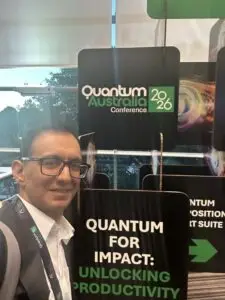
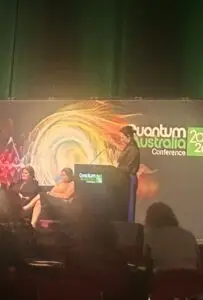
In April 2026, Rajiv Shah attended the Quantum Australia Conference in Adelaide. This started with pre-conference networking amongst the vineyards of McClaren Vale – a great opportunity to get to know the delegates, who were a cross-section of end-users, technology companies and researchers.
The main conference, over two days, offered plenty of choice, with parallel tracks of “Quantum Now” and “Quantum Next” so it was often difficult to decide which session to attend. In no particular order, some of the interesting takeaways included:
- Defence and space applications are currently very focussed on quantum sensing, as there is seen to be of lot of near-term potential for this to deliver real benefits. Interesting, although we often talk about the risks from our dependency on GPS, a national level risk assessment in the UK showed 85% of the risk could be mitigated by alternative timing sources only (so not dependent on position and navigation). Good news for companies such as QuantX working on quantum clock (although to be pedantic, these are really a variant of atomic clocks that have been around for many years!)
- A discussion on the role of standards. Although quantum technology is still at an early stage, standards can help in having a common terminology, and a way to be able to test and benchmark different systems. The world of standards is certainly not as dull and boring as you might think – it is where technology, commercial interests and geopolitics all meet!
- A healthy dose of realism about when quantum computing will deliver real value. A panel of leaders from major deep tech investment funds including Main Sequence Ventures and In-Q-Tel all admitted they are investing in technology with no current minimum viable product, an unknown addressable market, and a likely timescale for financial returns that exceeds the normal 5-10 year horizon. Meanwhile, HSBC were clear their current pilots are about building algorithms and skills to be ready for the future. Current “commercial advantage” often comes from “quantum-inspired” ways to improve how they currently use classical computers.
- An awareness of the potential security threats from quantum computing, and how it can impact our reliance on some current types of encryption. However, there seems to be a gap in creating the urgency to get started on upgrading systems it is required. Many speakers seemed to implicitly be calling for more regulation; however my own view is that this could have unintended consequences. The real gap is education and awareness about the real threat and giving practical guidance on how to start.
Overall, this is an exciting and fast-moving field, but one where you need deep understanding of the technology to find the right use cases and what is relevant to your organisation. If you’d like to explore whether our consulting services could help, please get in touch.
And if you are looking for an easy-to-understand but relevant and actionable guide to the cybersecurity risks and what you should be doing, check out our series of articles.